13. Tips for Approaching Chemotherapy

If you don’t have time to read all of my blog postings, here is my list of tips for getting through chemotherapy.  Some of the tips I have received from healthcare professionals, some I have read about online, and others I have discovered through trial and error.

Obviously, we are all different and react in different ways to treatment, but the things listed below helped me and they might just help you too.

Medications:

  • This seems really obvious, but I would suggest you make sure you take all your supporting medications exactly as prescribed. Still take the sickness drugs even if you don’t feel sick, especially before meals. I say this because I fell into the trap of thinking I didn’t feel so bad and then living to regret it two hours later when the sickness had got out of control.
  • Avoid grapefruit as it can reduce the efficacy of antisickness (and other) medications.
  • Stock up on over the counter medications like Gaviscon – your digestive system may take a battering and these medications can really help.

Diet and Supplements:

  • If you are trying fasting for chemotherapy, consider my four principles to help you put together your plan. Avoid sugars including bread, potatoes and fruit, and focus your diet around bulky, low-calorie green vegetables and low calorie protein (like chicken and white fish). Do speak to your healthcare provider before starting of course – mine said they wanted me to do whatever I needed to do to get through this.
  • Consider supplementing your diet with B vitamins and iron when your stomach feels settled enough between treatments. This will help replenish your red blood cells and immune system.
  • Try recipes from the Royal Marsden Cancer Cookbook, avoiding recipes containing starch and sugar if you are fasting.
  • Eat lots of turmeric, ginger, garlic and coloured vegetables as there is evidence that they contain elements that will help you fight the cancer. If you find turmeric, ginger and garlic becomes a bit harsh for your digestive system, do dial it back a bit.
  • If you get to the point where tea and water tastes bad, try sugar-free fruit squash with ice cubes in it, or herbal teas.
  • Black tea can be very acid forming for the stomach so try redbush or decaffeinated tea instead.
  • Coffee may be unpalatable for you during treatment. If so, you might try a supplement such as Barleycup.
  • Stay on top of your digestive system!  Some of the medications you are given might stop your digestive system from working properly. So… take extra fibre in the days before treatment and keep on taking those laxatives, whatever it takes to keep things a-movin’ on!

 Exercise:

  • Whilst taking EC chemotherapy, try gentle yoga moves and floor exercises when your body feels up to it, but don’t strain. If it doesn’t feel right, you’re not ready to do it. Try to walk every day, if only round the block, if you feel up to it.  If walking seems too much, gentle housework will keep your body active.
  • Whilst taking Taxol chemotherapy I have found exercise very hard and have been (and continue to be) fairly immobile throughout treatment. I did try to do a little bit of jogging and walking between treatments but the pain caused by Taxol got worse, so I’ve had to reduce my expectations of what I can do whilst taking and recovering from this drug. You will find your limits, but don’t be disappointed if you lose a bit of fitness whilst taking this medication.

Complementary Therapy:

  • I found acupuncture enormously therapeutic. I left it until very late in my treatment plan and wish I had tried it sooner.
  • If you are having Taxol treatment, I would suggest avoiding reflexology. Under normal circumstances I would really enjoy this treatment, but I think it made the Taxol pain in my feet and legs worse.
  • Aromatherapy massage was very relaxing with no noticeable side effects. I was lucky enough to receive a massage at my hospital and it was great to receive such a nurturing therapy after the harsh chemotherapy treatments.
  • I found Alexander Technique enormously helpful in managing stress and anxiety.

Mind:

  • Investigate the work of Jon Kabat-Zinn. His no nonsense and medical approach to meditation to help people through stress and illness has been enormously helpful to me.
  • If you are feeling lousy, try doing a ‘body scan’ where you focus on each part of your body individually noting how it feels. In places there will be pain or sickness, but many other parts of the body will feel fine. Try to focus on the ‘fine’ feeling as much as you can and try to ‘zone out’ the ill feelings. Easier said than done, but I find that, with practice, it helps calm the mind and body.
  • Try my PLANNTB meditation technique to help you develop the right attitude to meditate. Based on the work of Jon Kabat-Zinn, I find this quickly helps me zone out and relax.
  • And finally, sleep! Listen to your body and rest when you need to…

So, that’s it for now.

For friends and family, I hope this blog has been a useful way of staying up-to-date with what has been going on.

For those of you facing the daunting prospect of chemotherapy and are wondering whether fasting might work for you, I hope you found some useful information on these pages.

For me, knowing that people might be expecting to read something here each week has provided me with an extra incentive to get through what has been an enormously challenging time. Writing this blog and receiving your comments has helped me see the positives where perhaps they might not have been if I was doing this without you.

Thank you.

Della x

Disclaimer

The information contained in this post or any other post on this blog is based on personal experience and should not be viewed in any way as medical or other advice. If you are considering fasting for chemo, please consult your healthcare provider.

Copyright © 2015 Johnson
12. My Four Principles of Fasting for Chemo

Fasting for Chemo – Does it Work?

Of course, we won’t know for sure whether it works or not without randomised clinical trials, so I can only speak from my own experience and, whilst I have been through some deeply unpleasant times, I do feel as though it could have been worse. To give you an idea…

  • Infection is common as the immune system is weakened by the chemotherapy. I have not had any infections throughout treatment and my temperature has remained normal;
  • Anaemia is a common side effect as red blood cells drop. My red blood cells have dropped from 4.81 to 3.62, and haemoglobin has dropped from 155 to 114, but not to the extent that a transfusion is needed or treatment postponed;
  • Nails often become discoloured or brittle. My nails have weirdly never been healthier;
  • It is common for skin on the fingertips to become dry and cracked during treatment. I have experienced a very mild version of this (a slight drying of the skin) after some treatments, but it has lasted only 1-2 days with no cracking;
  • Whilst my hair has fallen out, my brows and eyelashes have been very slow to start falling out and have only recently become noticeably thin;
  • My digestive system has been noticeably better when I have fasted for longer. In particular the sense of internal disintegration (caused by acid) appears to reduce whilst fasting.
  • Nosebleeds are a very common side effect. I have had three minor nosebleeds in total across the 8 treatments.
  • Mouth pain is common and you are given bottles of mouthwash to help reduce this side effect. On just one occasion I had mouth pain that required painkillers to eat;
  • People often report a metallic taste in the mouth and tainted taste buds. For the first few days after treatment food and drink does not taste quite right to me, but I have not experienced a metallic taste and I have been able to enjoy food to a greater or lesser extent during each treatment;
  • Whilst there is no avoiding the nausea caused by EC chemotherapy immediately following treatment, careful management of the digestive system (see Principle 2, below) can help manage this symptom;
  • I have found that fatigue has crept up on me as treatment has progressed.On September 23rd I posted three emerging principles of Fasting for Chemo based on my own personal experience during EC chemotherapy. I said I would continue to test these principles whilst receiving Taxol infusions and, on reflection, I have added in one more principle.  So, my four Fasting for Chemo Principles, developed whilst writing this blog, are:

My Four Principles of Fasting for Chemo

  1. 350 calories-a-day for six days (2 days before and 4 days after treatment)
  2. Take care of your digestive system
  3. Break fast by eating little and often
  4. Whilst breaking fast, watch for warning signs

Principle 1: 350 calories-a-day for six days

Using scientific papers to inform my approach, I have been fasting for two days prior to each chemotherapy treatment and for four days afterwards. The two days before treatment allows the body sufficient time to enter into a state of ketosis, which allows cells to ‘hide’ from the damaging effects of the chemotherapy. The four days after treatment allows time for as much of the chemotherapy agent as possible to leave the body, without having a detrimental impact on your overall health.

Whilst on both Taxol and EC chemotherapy I tried slightly relaxing the duration of the fast and experienced more negative side effects to the digestive system. Specifically, I found that by breaking fast earlier when there is more chemotherapy agent in my body, my digestive tract became much more acidic and I experienced a sense of ‘internal disintegration’. Whilst correlation is not causation, I remain convinced that this unpleasant sensation improved when I fasted for longer.

Principle 2: Take care of your digestive system

This seems like an obvious thing, but I cannot stress enough the importance of following the instructions your medical team give you in relation to taking care of your digestive system! In short (and I will spare you the details…!), the sooner you excrete the chemotherapy drugs from your body the better you will feel.  So… pad out your diet with as much low calorie fibre as possible (celery, spinach, cucumber), throw in supplements like Fybogel and Silicol Gel, then take everything the hospital gives you to keep things moving!

Principle 3: Break fast by eating little and often

This was particularly important for EC chemotherapy because even four days after treatment there is still a considerable amount of the medication in your body, so it’s a matter of eating small amounts and waiting to see if there is a negative reaction. After six days fasting my body is usually craving carbohydrate, but go easy if you can, especially at first, because you don’t want to flood your system with sugar and overstimulate your cells if there is still chemotherapy in your body.

Principle 4: Watch for warning signs

Once I have broken fast and am eating little and often, I find it’s best to wait 1-1.5 hours after eating to see how my body responds. If I feel nauseous, acidic or deeply fatigued, I know I have probably eaten too much too soon and will wait a while before trying again. I gradually build my diet up from full fast in this way, and try not to be disappointed if I have to take one step back to take two steps forward.

Thank you so much for taking the time to read this. If you or someone who care for is going through cancer treatment, I wish you all the very best.

Della x

Disclaimer:

The information contained in this post or any other post on this blog is based on personal experience and should not be viewed in any way as medical or other advice. If you are considering fasting for chemo, please consult your healthcare provider.

Copyright © 2015 Johnson

11. Into the Final Fast

Into the Final Fast

I can hardly believe it, but I’m now 31 hours into the final fast before my (hopefully!) last chemotherapy session tomorrow (29th October 2015). In Blog 10 I felt it was too early to discuss how the fasting was going for that treatment, and that I would update you today.

So,  I can report that I stuck rigorously to my six day fast (350 calories-a-day for two days prior to treatment and for four days afterwards) and, whether cause or correlation, my digestive tract has had an easier ride this time overall. I have also had less severe pain, although I do have some ‘peripheral neuropathy’ (or numbness) in the fingers and feet, along with some leg pain, which would probably be expected to go by now. On that basis, we have agreed to reduce my chemotherapy dose by 20% tomorrow because my treatment outcome will not be affected, and that numbness can be permanent if not managed properly.

Keeping it Simple

When I started fasting I was preparing quite elaborate soups and stews which were delicious but, now I am receiving treatment every two weeks and am starting to feel very tired, it has been quite tricky to maintain.  So, my approach now is to keep it very simple, focusing on protein and vegetables for all meals, including breakfast. Sample meals include:

Breakfast (88 cals)

  • Soft boiled egg
  • 80g celery cooked in stock and cut into dipping ‘soldiers’ (with celery salt to taste)

Lunch (110 cals)

Dinner (147 cals)

  • 100g grilled chicken
  • 50g steamed green beans
  • 30g steamed broccoli
  • 100g steamed spinach
  • 60g steamed carrot

It’s pretty simple huh?! But doing it this way you actually get a really good plateful of food and, being simply prepared, it is gentle on the digestive system.

If you are vegetarian you could of course substitute the chicken for Quorn or a similar high protein product.

Much Reduced Surgery

After a summer of chemotherapy and fasting, I was feeling pretty nervous before my meeting with the Royal Marsden breast surgery team last week to discuss the surgical options open to me. Would the weeks of sickness and pain have been worthwhile?

Given that the starting point was a radical mastectomy back in June, I am so relieved to report that my surgical team are confident that they can remove the cancer by carrying out much reduced surgery on just one side.  What’s more, the scan they were working from was taken before my last two rounds of Taxol chemotherapy, so we can expect the tumours to have reduced even more by the time I have surgery on 26th November.   The neoadjuvant chemotherapy has done its job.

Thanks again for reading… If you are going through a similar experience I wish you all the very best.

Della x

Disclaimer:

The information contained in this post or any other post on this blog is based on personal experience and should not be viewed in any way as medical or other advice. If you are considering fasting for chemo, please consult your healthcare provider.

Copyright © 2015 Johnson

10. Extending the Fast Again…

In Blog 9 , I talked in more detail about the rationale behind the 350 calories-a-day fasting approach.  In that blog I reported that, having started to receive fortnightly Taxol infusions, I had broken fast early because the clearance time for Taxol is relatively quick. I also felt ready to eat (low blood sugar and low mood!).

I did however come to regret this decision later in the week as I experienced quite strong nausea on day 5 and gastrointestinal tract disturbance on days 9 and 10. Clearly we will never know for sure whether this would have happened anyway, but this week I am going to fast for the full four days after chemotherapy to see if this makes a difference. I hope this is not frustrating for readers, but I think you will appreciate that this is a personal experiment and I am testing out approaches as I go. I will bring together all my thoughts when my chemo regime has come to an end, and provide a list of general tips for handling chemotherapy, based on my own personal experience.

Side Effects of Taxol

As I now have two Taxol treatments under my belt, I think it’s useful to report on my experience of side effects, compared with the side effects anticipated by Macmillan Cancer Support:

Common side effects of Taxol according to Macmillan Cancer Support Side effects I have experienced whilst on Taxol
Infection No infection to date for either EC or Taxol chemotherapy.

White blood cell count 3,200 per cubic mm of blood, which is slightly but not significantly below the normal range of 4,000-11,000.

Bruising and bleeding Not applicable
Anaemia Red blood cell count 3.58m per cubic mm of blood, which is slightly but not significantly below the normal range of 3.8m-5m.
Nausea Day five, the day after breaking fast one day earlier than planned.
Upset stomach Days nine and 10
Sore mouth Not applicable
Numb hands and or feet Slightly numb and tingling feet gradually improving.
Tiredness Some tiredness, but not excessive.
Hair loss Hair loss started with EC chemotherapy and has gradually continued throughout the programme. As of today approximately 90% of my hair has fallen out, and my eyebrows and lashes are starting to thin.
Muscle and or joint pain This has been the main feature of Taxol treatment for me. Inflammation controlled using Ibuprofen supported by 30mg Cocodamol and Tramadol as required.
Nail changes Not applicable.

 Exercise and Complementary Therapy

To help mitigate side effects it is common for people to seek complementary therapies during cancer treatment. To be honest I’ve not felt well enough to plan for this kind of treatment until recently.

But this week I have been lucky enough to have had an aromatherapy massage at the Royal Marsden using a combination of black spruce and lavender oils – highly recommended. It was fantastic to be in the hospital and on the receiving end of a gentle treatment that didn’t involve needles or pain!

I have also enjoyed acupuncture at the Yuan Centre in Colliers Wood. I had just four needles during the treatment, two of which were to support ‘nourishment of the blood’, and two were to support the immune system.

Finally, inspired by four of my dear friends who have recently run marathons, I decided to sign up for a marathon too. Only joking! No, one step at a time…. But I did download one of the ‘Couch to 5K’ apps on my mobile phone and will gradually build my fitness that way. It may be slow going until after the chemotherapy has finished as leg and foot pain is a feature of Taxol and I did have to take painkillers after my first jogging session, but the intention is there!

Next Week…

My penultimate chemotherapy session is tomorrow and my last session is on 29th October 2015. I am not relishing the next week, but I am armed with painkillers and know what to expect. I am also heartened by today’s scan which showed that my two tumours appear to be still shrinking (the smallest is now approximately 3mm and the larger one is approximately 1cm).  I’m meeting with my surgeon on 22nd October to discuss surgery options (please keep your fingers and toes crossed that the chemotherapy has been effective enough to remove the need for full mastectomy…).

Onwards and upwards!

Thanks again for reading, I love getting your comments and feedback.

Della x

Disclaimer:

The information contained in this post or any other post on this blog is based on personal experience and should not be viewed in any way as medical or other advice. If you are considering fasting for chemo, please consult your healthcare provider.

Copyright © 2015 Johnson

9. 350 calories-a-day for six days – The Rationale

Since Blog 7, when I posted three emerging principles of Fasting for Chemo, a few people have asked me to explain in a bit more detail the thinking behind the first principle: 350 calories-a-day for six days.

So, I thought today it would be useful to discuss this with you and provide links to the papers that informed the decisions I have taken over the past few months.

Please check out Further Reading for references.

Medical Advice:

From the outset I told my doctor at the Royal Marsden that I was fasting for chemotherapy, and their attitude was that, whilst there is some evidence to suggest fasting might help, it is not Royal Marsden policy to support fasting and so, as long as I was getting a well-balanced diet overall, I was to do whatever I needed to do to get through treatment.

I should also confess at this point, however, that I have had medical and scientific input from someone close to me who is not only a medical doctor, but who also has a PhD in molecular biology. My approach is therefore supported not only by emerging scientific research, but is also informed by a medical professional who knows and understands my personal situation.

Why 350 Calories-a-day?

Fasting has been shown to be an effective way of lengthening life span, reducing cell damage, enhancing stress resistance and delaying  aging and age-associated illnesses such as cancer in various species, including mice, rats, and non- human primates (McCay et al, 1935; Weindruch et al, 1986; Masoro, 1995; and Colman, 2009).

Moreover, a large cohort study with over 2000 participants investigated the safety of fasting in patients with chronic disease (Michalsen et al., 2005). In this study, the authors determined that eating 350 calories a day was safe and considered by many of the participating subjects to be beneficial to their illness.

Why Fast for Two days or 48 hours Prior to Chemotherapy?

Until recently these two aspects had not been brought together and tested in humans, but in 2009 a small study was carried out with 10 humans with a range of cancers who voluntarily fasted for a total of 48 to 140 hours prior to and/or 5 to 56 hours following chemotherapy. They reported a reduction in common chemotherapy-associated side-effects such as vomiting, diarrhoea and fatigue. Significantly, there was no evidence that fasting protected tumours or reduced the efficacy of chemotherapy. The authors note that their work is not meant to establish practice guidelines for patients undergoing chemotherapy but that only controlled-randomized clinical trials will determine the effect of fasting on clinical outcomes including quality of life and therapeutic index (Safdie et al.,2009).

Using previous studies and my personal medical advisor to guide me, I decided to fast for 48 hours prior to treatment, which not only seemed to be a realistic fast duration but also allowed the body sufficient time to enter a state of ketosis, which is the aim of fasting for chemotherapy.

Why Fast for Four days after Chemotherapy?

The treatment path I followed initially was four sessions of EC Chemotherapy, which comprises two medications: Epirubicin and Cyclophosphamide. The half life (or time it takes for half of the drug to leave your body) of Epirubicin is approximately 30-40 hours and the half-life of Cyclophosphamide is approximately 3-23 hours although results vary between individuals depending on their age and health.

Based on this information, fasting for four days or 96 hours after treatment seemed like a good way of ensuring my body had cleared as much of the drug as possible without restricting my diet for too long, which may have other unforeseen consequences.

A Flexible Approach

When I started this blog I was undergoing EC Chemotherapy and I had planned to eat 350 calories for two days prior and two days after chemotherapy, increasing to 500 calories for a final two days. But, after experiencing more extreme side effects when I increased my calorie intake, I decided to keep calorie consumption at 350 for six days for the duration of my EC Chemotherapy programme.

I have now finished my EC Chemotherapy regime and have started Taxol, which has a much quicker clearance rate, indeed, 50% of the drug Taxol is excreted between 3 and 51 hours after treatment, depending on the individual’s overall health.  After my last treatment on 1st October, I was prepared to fast for the full four days as usual, but by day three I felt ready to eat again. So, I broke fast 24 hours early and, with the exception of a bout of nausea, I am eating normally which, compared to previous treatments, is very early in the cycle.

Based on this personal experience, if you are considering fasting for chemotherapy, you might consider checking the clearance rate of the chemotherapy medication(s) you are taking and adjust your fast time accordingly.

Randomised Trials Needed

Whilst there is emerging evidence in this interesting field, it is abundantly clear that large scale, controlled and randomised trials are required. There has been encouraging news in 2018 that fasting can improve quality of life and reduce fatigue but clinical trials are ongoing.

Della x

Disclaimer

The information contained in this post or any other post on this blog is based on personal experience and should not be viewed in any way as medical or other advice. If you are considering fasting for chemo, please consult your healthcare provider.

Copyright © 2015 Johnson

8. Alexander Technique

Using Alexander Technique to Relieve the Stress of Illness

In Blog 7 I said I would discuss Alexander Technique as part of my holistic approach to beating breast cancer.

In addition to helping people with long- term back pain and Parkinson’s Disease, this non-invasive therapy may also help people deal with insomnia, headaches and stress, all of which can be associated with chemotherapy treatment.

The main principles of the Alexander Technique are:

  • “how you move, sit and stand affects how well you function”
  • “the relationship of the head, neck and spine is fundamental to your ability to function optimally”
  • “becoming more mindful of the way you go about your daily activities is necessary to make changes and gain benefit”
  • “the mind and body work together intimately as one, each constantly influencing the other”

Whilst Alexander Technique is usually taught over a number of sessions, my teacher told me one of the most useful things anyone has ever told me and I’m going to share it with you! He simply suggested that I lie flat on the floor with my knees hip-width apart and bent at the knee with a book (say 3cm deep) under my head every day for about 15 minutes. Just lie there and see what happens, he said.

Naturally I was a little cynical, but gradually, over a period of weeks, my body somehow evened out – I could feel it click-click-clicking into shape. Now, with the additional benefit of a few lessons, I find that my attitude to posture and movement has totally changed, and I can also use the Technique to relax me and help me sleep in almost any situation.  Amazingly, I can even head off migraines, which have plagued me for years.  I really recommend Alexander Technique as a way of managing stress both in sickness and in health!

Thank you for reading and for getting in touch with your stories and comments, it’s great to hear from people who are going through similar experiences.

Della x

Disclaimer:

The information contained in this post or any other post on this blog is based on personal experience and should not be viewed in any way as medical or other advice. If you are considering fasting for chemo, please consult your healthcare provider.

Copyright © 2015 Johnson

7. The Emerging Principles of Fasting for Chemo

Because I have just started the next phase of my chemotherapy regime– four doses of Accelerated Taxol every two weeks – it’s impossible to compare it with my experiences during EC chemotherapy.   But my approach to fasting remains the same and this week I discuss my emerging three principles of Fasting for Chemo.

Muscle and Joint Pain Presents Challenges

Receiving the Accelerated Taxol infusion (this word makes it sound like a nice cup of tea, which I can assure you it was not!) was harder for me than receiving the dose of EC chemotherapy, but the two days afterwards were much easier and required almost no prescription drugs to mitigate the side effects. This meant no rollercoaster ride of drug-induced ‘wild weasel’ highs (as my partner affectionately calls them), followed by crashing ‘sea cucumber on the bottom of the Mariana Trench’ lows. This was very welcome.

The main challenge for me this time has been muscle and joint pain and numbness (peripheral neuropathy), which started about 36 hours after treatment. This pain occurs when the chemotherapy agent damages the fast growing lining of the blood vessels and capillaries that feed your nervous system. They then become ‘leaky’ which puts pressure on the nerves and causes pain, especially in the joints. This pain was described to me beforehand as being like ‘flu like’ aches and pains. I personally experienced quite severe pain on days 2, 3 and 4. If you are facing Taxol treatment, do make sure you are sent away with some strong painkillers in the event you experience this unpleasant side effect.

Digestive System Relatively Robust

With the exception of a six hour episode of digestive system disturbance and a random vomiting episode yesterday (likely caused by inflammation of the digestive system), I have experienced little or no nausea and at the present time my digestive system is holding up well.  I am still taking omeprazole to control acid production in the digestive system, and was prescribed domperidone to take as required. I also find Silicol Gel is helpful.

Emerging Fasting for Chemo Principles

My emerging Fasting for Chemo Principles, which I have developed whilst writing this blog, and will continue to test over the coming weeks, are:

  1. 350 calories-a-day for six days
  2. Break fast by eating little and often
  3. Watch for warning signs

Principle 1: 350 calories-a-day for six days

For my latest chemo session, I stuck rigidly to 350 calories-a-day for two days prior to treatment and four days after.  I ate high quality protein at every meal along with low calorie but high fibre vegetables.  I didn’t eat anything sweet (including fruit and sweet vegetables), nor did I eat any form of bread, potato, pasta, or other carbohydrate that ultimately breaks down into sugar.

I’ve included a few days’ menus here to give an idea of what I ate, including some ideas of what to eat when out and about.

Day -1 (day before treatment)
Mealtime Menu
Breakfast 1 organic free-range egg and mushroom omelette with fresh parsley
Lunch Smoked salmon and egg protein pot
Evening Meal 50g chicken with Bob Granleese’s Pot-Roast Cauliflower from the Royal Marsden Cancer Cookbook and 50g green beans


Day 0 (day of treatment)
Mealtime Menu
Breakfast Vegetable and pea protein Nutribullet smoothie
Lunch
Evening Meal 150ml Cauliflower soup using leftovers from yesterday’s Pot-Roast Cauliflower from the Royal Marsden Cancer Cookbook
Day 1
Mealtime Menu
Breakfast 1 organic free-range egg and mushroom omelette with fresh parsley
Lunch 150ml Celeriac Soup, with Coconut, Lemongrass and Ginger from the Royal Marsden Cancer Cookbook
Evening Meal 20g smoked mackerel, 30g carrot salad, 20g Parsons Pickles Laverbread
Day 2
Mealtime Menu
Breakfast 100g plain yogurt
Lunch 150ml mushroom and thyme soup
Evening Meal 100g turkey breast baked with smoked paprika, ratatouille (50g), grated carrot salad

Drinks:

To support my digestive system, I try to avoid acid-generating caffeinated drinks such as tea and coffee and replacing them with redbush tea and other herbal teas (my favourites are Eleven O’Clock and Yogi Teas), and coffee substitutes like Barleycup.  Avoid fruit juices and replace with water. On the one occasion water became unpalatable, I tried weak no sugar added squash to keep me hydrated. I avoid carbonated drinks as these are too aggressive on the digestive tract.

Principle 2: Break fast by eating little and often

In a way, the six days of strict fasting are straight forward – I carefully measure my calories and eat them at the appropriate time. But, in my experience, breaking fast is the tricky bit. You see, the chemotherapy agents are all gradually excreted from the body and the length of time this takes varies between individuals. As an example, 50% of the drug Taxol will be excreted between 3 and 51 hours after treatment. 3 and 51!! This is quite a variation… The more drug you have in your body, the more side effects you might experience because, as you eat food, the cells are stimulated to divide and grow, which triggers the chemotherapy to destroy them, and this in turn causes side effects such as nausea and general illness.

So whilst it’s tempting to FEAST when I break my fast, personal experience now tells me that eating little and often really is the key to ensuring I don’t overload my system and trigger nausea and general feelings of illness. I can still eat tasty and rewarding things, I just have to somehow avoid diving into that bowl of mashed potato!

Principle 3: Watch for warning signs

After I have eaten a little meal, I find it’s best to wait 1-1.5 hours after eating to see how my body responds. If I feel sick, or develop the unmistakable sensation of chemotherapy at work (for me this is a tingly, acidic, unpleasant sensation all over the body accompanied by fatigue), I know I may have eaten too much and might want to consider waiting a while before trying again. I gradually build my diet up from full fast in this way, and try not to be disappointed if I have to take 1 step back to take 2 forward.

Next Time…

I’m really glad I can break fast now because, as you can see from the picture, my pears are about ready– it’s been a bumper harvest this year – so I will be enjoying those over the next few days…

Next week I will be in fasting mode again! Following on from my short piece on mindfulness last week, and in the spirit of sharing other aspects of my holistic approach to beating breast cancer, I’m also going to discuss my approach to Alexander Technique as a way of managing stress during illness (and health!).

Thank you for reading and I hope you’re well. If you have any information or stories relating to fasting for chemo, please do get in touch.  I will be adding a ‘further reading’ page so look out for that!

Have a good week.

Della x

Disclaimer:

The information contained in this post or any other post on this blog is based on personal experience and should not be viewed in any way as medical or other advice. If you are considering fasting for chemo, please consult your healthcare provider.

Copyright © 2015 Johnson

6. A Mindful Approach

A Calm Digestive System and Encouraging Scan Results

Over the last week I’m pleased to report that the inflammation reported in my last blog (9th September 2015) has subsided, with the help of Omeprazole, and I’m gearing up for the next session of chemotherapy tomorrow (Thursday 17th September).

As I will be starting a new drug (Accelerated Taxol) on 17th September, it will be impossible to compare side effects with the previous weeks, but I plan to follow the same regime (350 calories a day for 2 days prior and 4 days after chemotherapy treatment). This time, however, I will be keeping starchy carbohydrates and sugar to an absolute minimum after breaking fast, in an attempt to protect my digestive system.  I will report back next week!

I had a second scan today and I’m happy to report that the tumours appear to have shrunk by about 50% overall since the beginning of treatment. I am so grateful for this good news and cannot imagine how it must be to receive less positive scan results.

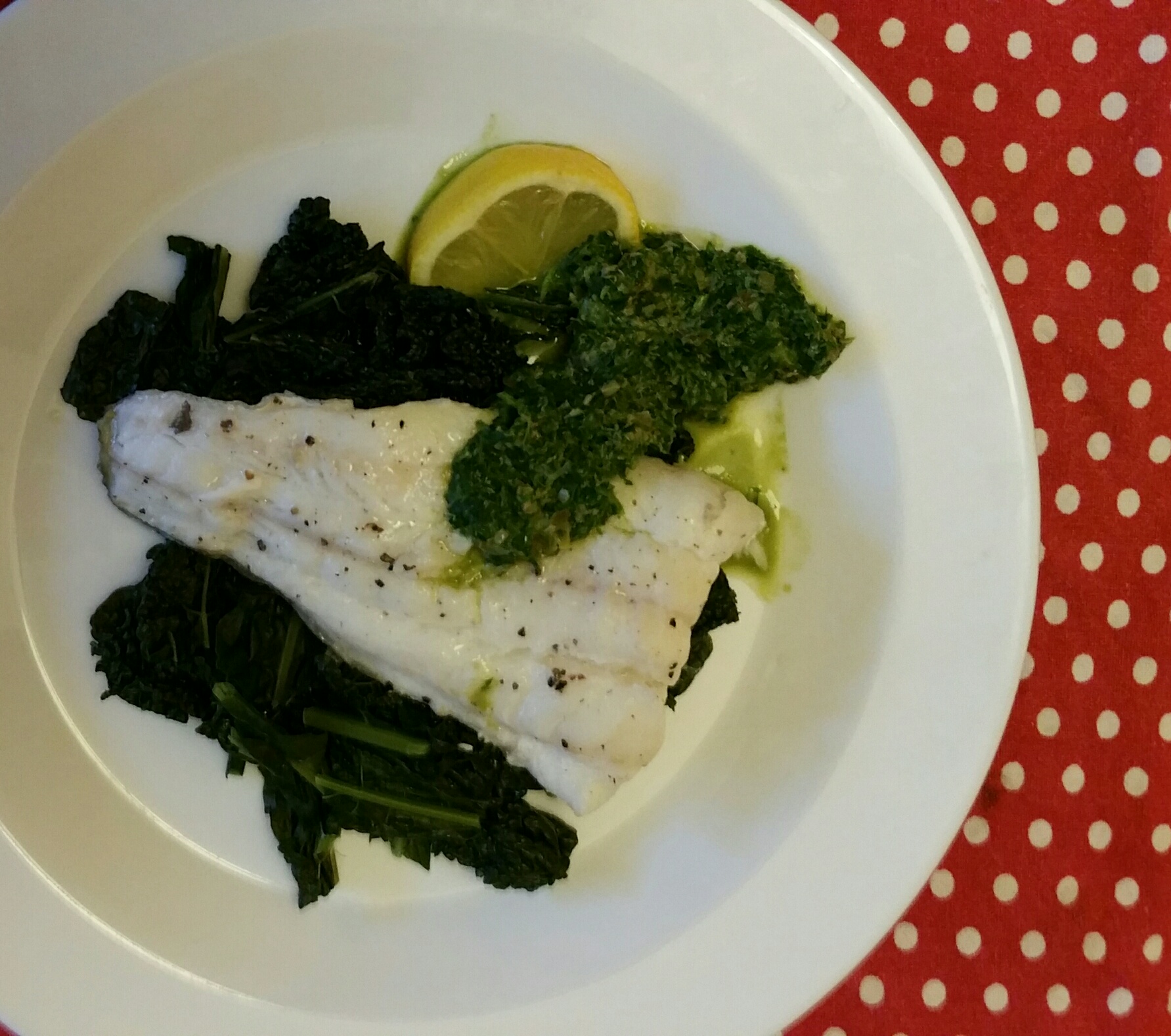
Sample Fasting Recipe: Baked Cod with Salsa Verde and Kale

To give you an idea of the kind of meals my partner (who is fasting for 48 hours in support each time) and I are enjoying, I’m sharing this tasty recipe for you to try.

Baked Cod with Salsa Verde - a tangy, tasty fasting recipe for you to try!
Baked Cod with Salsa Verde – a tangy, tasty fasting recipe for you to try!

Serves: 2 people

Calories: 160 per serving

Ingredients

  • 2x 100g cod fillets
  • Juice of half a lemon
  • 100g kale (or spinach) chopped
  • Salt and pepper

For the Salsa Verde

  • A handful each of fresh parsley, basil and mint
  • 2x anchovy fillets
  • 1 tsp dijon mustard
  • ½ tbsp red wine vinegar
  • Dash of olive oil
  • Water to taste

Method

  1. Preheat the oven to 180⁰C (fan) or 200⁰C (non-fan) or Gas Mark 6
  2. Blitz the ingredients for the Salsa Verde in a food processor, adding water slowly until the sauce is as smooth and thick as possible
  3. Using a pastry brush, apply a tiny bit of olive oil to the cod fillets, then season, and squeeze over the juice of half a lemon
  4. Bake the cod fillets in a hot oven for 5-7 minutes or until the flesh is milky white in colour and flakes nicely
  5. Steam the kale for 5-7 minutes or until tender
  6. Serve the cod on a bed of kale with the Salsa Verde on the side or drizzled over the top, and enjoy…

A Mindful Approach

The simple act of paying attention and being in the present can be incredibly powerful and has now become mainstream.

My approach is inspired by the work of Jon Kabatt Zinn, PhD, founding Executive Director of the Centre for Mindfulness in Medicine, Health Care, and Society at the University of Massachusetts. He has advised the UK government on mental health policy and has been one of the leaders of dialogue between science and Buddhism. I was introduced to his work by the excellent team at the Barts Hospital  Chronic Fatigue Service in London.

If you have the time and inclination I recommend his book, Full Catastrophe Living, or his meditation CD, Mindfulness for Beginners. The great thing about his work is it is very grounded and evidence based.

But if you don’t have time to read his work, here is my simple take on it. I boiled it  down into the PLANNTB acronym  – seven simple words or attitudes that will help you pay attention and be in the present…. will help you cultivate the power of mindfulness.

  1. Patience – with yourself, with those around you, with your situation;
  2. Let go – of stress, of worry, of tension;
  3. Accept – your situation, it won’t last forever, this is just your reality for the time being;
  4. Non striving – you don’t need to be anywhere or anyone else, just be comfortable in your own skin;
  5. Non judging – don’t judge yourself or those around you, what they say or what they do;
  6. Trust – your body to heal itself, to take care of you.
  7. Beginner’s Mind – approach each day afresh and remember that even the most wise Buddhist spiritual leaders will tell you that they know nothing.

The key here is really meaning the words, really putting them into action. I am finding I can face almost anything with access to the PLANNTB – I hope it is of use to you.

Thanks again for reading. Do get in touch if you have experience of fasting for chemo you would like to share!

Della x

Disclaimer:

The information contained in this post or any other post on this blog is based on personal experience and should not be viewed in any way as medical or other advice. If you are considering fasting for chemo, please consult your healthcare provider.

Copyright © 2015 Johnson


5. White Blood Cells Rally whilst Digestive System Comes Under Pressure

Digestive System Under Pressure

In Blog 4, I updated you on the symptoms I had experienced during the week following my fourth and final EC chemotherapy session. These included nausea and gastrointestinal (GI) disturbance for the first four to five days following treatment.

One week on and I am still making good progress, although things have not been as smooth as I was hoping for!

In addition to nausea and GI disturbance during the first 4-5 days after treatment, the significant side effects I have experienced after this final EC treatment now include:

Side Effect Timescales Norm Management
Mucositis (inflammation of the digestive system) Started day 50 of chemotherapy regime According to the NHS, the symptoms of mucositis would “usually begin 7 to 10 days after you start chemotherapy” Omeprazole

Gaviscon

Liquorice tea

Mouth Soreness Started day 74 of chemotherapy regime According to Cancer Research UK, this symptom can occur “about 5 to 10 days after you start treatment” Home made salt / bicarbonate of soda mouthwash

Bonjela  

The side effects of mucositis and mouth soreness would normally be expected to start around one week after the beginning of chemotherapy, suggesting that there may be a cumulative impact of treatment. In which case, whilst these side effects are extremely unpleasant, I am relieved they have only started now.

White Blood Cells Rallying

Chemotherapy can reduce the number of white blood cells in your body, which we all need to fight infection.

In 2014, researchers reporting in the journal Cell Stem Cell (published by Elsevier) reported that “periodic fasting may combat … chemotherapy-induced … changes in immune cell function by replenishing stem cells in the blood”. This means that your white blood cells effectively ‘go to sleep’ during fasting. After you break your fast, the white blood cells wake up with a vengeance and can, in theory, target the cancer cells more aggressively resulting in an improved tumour response to chemotherapy treatment.

So, I was delighted to hear that a blood count report carried out on 25th August 2015 showed I have a normal white blood cell (4.2×10⁹ /L) and neutrophil count (2.0×10⁹/L).

My first ultrasound scan showed a tumour reduction of about 20% after just two chemotherapy sessions.

Fasting for Taxol

I have now completed all four EC chemotherapy treatments and now have just four Accelerated Taxol treatments ahead, before surgery towards the end of the year and radiotherapy thereafter.

So, next Wednesday I’ll be in full on fast mode again – 350 calories a day for 2 days prior and 4 days after chemotherapy treatment. This time, however, once I have broken fast, I will be trying to keep starchy carbohydrates and sugar to an absolute minimum in an effort to protect my digestive system. Of course, I will report back to you how it is going.

Next time I’m also going to introduce mindfulness as an approach to handling the psychological challenges of cancer.

Thanks for reading. I hope this information is useful to you. Do get in touch if you have experience of fasting for chemo you would like to share!

Della x

Further Reading:

Fasting may protect against immune-related effects of chemotherapy and aging

Disclaimer:

The information contained in this post or any other post on this blog is based on personal experience and should not be viewed in any way as medical or other advice. If you are considering fasting for chemo, please consult your healthcare provider.

Copyright © 2015 Johnson